
Damp, mould or repairs still unresolved?
Start a housing disrepair claim enquiry. Add photos and a few details for our team to review.
Free to send. No account needed. At least one photo required.
With your permission, suitable enquiries are passed to mark, who decides whether to take your claim forward.
Urgent or dangerous repair? Report it to your landlord’s emergency repairs line first.
Tenant Claim Support is run by Iclaims Expert Ltd · FCA Firm Reference Number (FRN): 837559 · Who we are
Four steps to send your enquiry.
Each one takes a few minutes. You won’t be asked anything twice.
- Step 1: Your homeChoose the problem, how long you’ve had it, your tenancy type and the property address.
- Step 2: Your landlordSay when you told your landlord and what they did. Add screenshots of your messages if you have them.
- Step 3: PhotosTake a photo or choose existing ones. At least one of the problem is needed.
- Step 4: SendAdd your contact details and submit for review. You can add your ID afterwards if you like.
Tenants, in their own words.
Short videos from people who sent an enquiry. Every outcome is different.
Swipe to see more →Photos that help.
Choose the problem to see which photos help our team most. A wider photo and a close-up are a good start.
- Where the water comes inA ceiling stain, a dripping pipe, or a gap around a window or door.
- The damage underneathWet or stained walls, ceilings, floors or carpets.
- How you’re catching itBuckets, bowls or towels you’re using to catch or soak up the water.
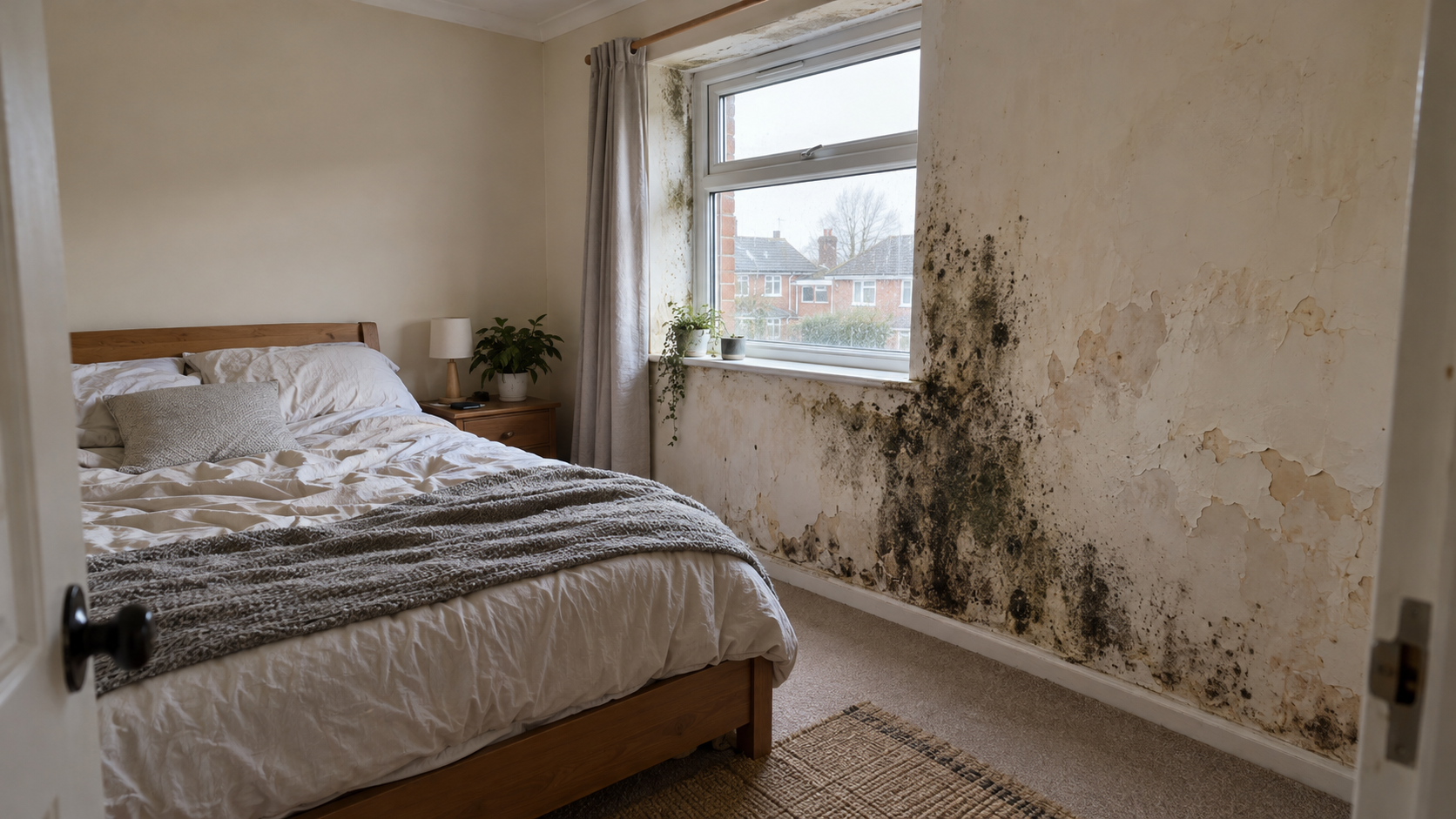
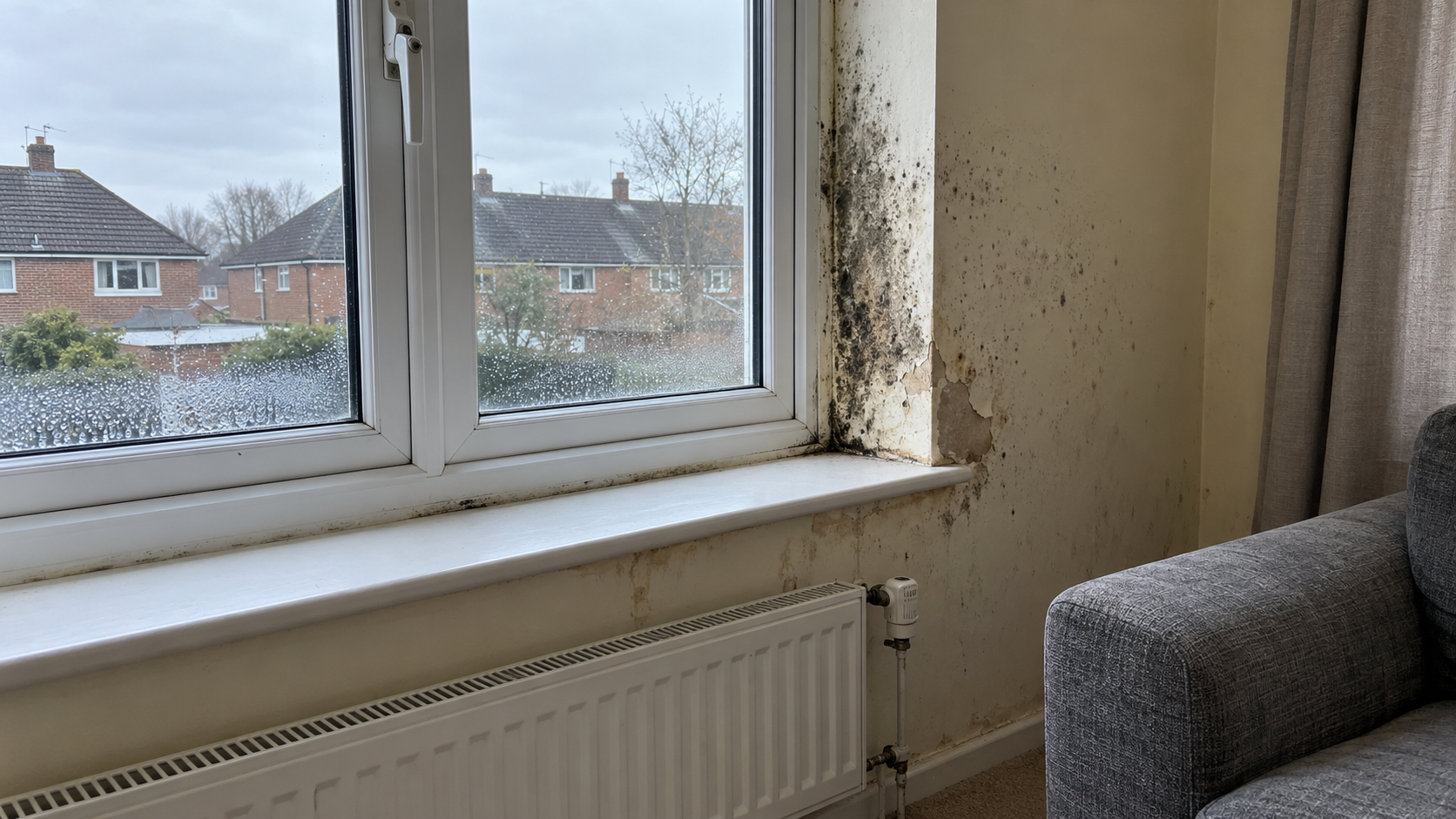
- The whole wall or ceilingStep back so we can see where the damp or mould is and how far it has spread.
- The mould up closeGet close enough to show the spots, staining or peeling paint clearly.
- Damage to your thingsClothes, bedding, furniture or carpets that have been marked or spoiled.
- The boilerInclude its display if it shows an error code or a warning light.
- Radiators and controlsA radiator that stays cold, or the thermostat showing the temperature.
- What you’re using insteadElectric heaters, or kettles and pans used to heat water.
- The whole window or doorStep back so we can see which one it is and what’s wrong with it.
- The damage up closeA broken catch or lock, cracked glass, a rotten frame or a gap that lets in draughts.
- Signs of what it causesCondensation, mould around the frame, or water coming in when it rains.
- Signs of themDroppings, nests, gnawed food or packaging, or the pests themselves if you can.
- How they get inHoles or gaps in walls, floors, skirting boards or around pipes.
- Damage they’ve doneChewed wires, wood or belongings, and anything you’ve had to throw away.
- The boiler and its displayInclude any error code, warning light or pressure gauge.
- Leaks or damageWater dripping underneath, rust, scorch marks or a damaged flue.
- Any notes left on itA “do not use” sticker or a note from an engineer.
- The socket, switch or lightOne that doesn’t work, sparks, buzzes or has scorch marks.
- Damaged or loose wiringExposed wires, loose fittings or a cracked cover. Don’t touch anything to get the photo.
- The fuse boxIf a switch keeps tripping, a photo of the fuse box or consumer unit.
- The whole area firstStep back so we can see which room it’s in and what’s affected.
- Then get closerA close-up shows the crack, break or damage clearly.
- Anything it has damagedYour belongings, or other parts of your home it affects.
Please leave out faces and personal papers. Up to 10 photos, 10 MB each. JPEG, PNG or HEIC.
Housing disrepair claims, explained.
Plain answers to what tenants ask most, for England and Wales.
What is a housing disrepair claim?
A housing disrepair claim is a legal claim a tenant can make when their landlord knows about a repair problem and hasn’t fixed it within a reasonable time. It can ask for the repairs to be done and, in some cases, for compensation.
Most claims start with a letter to the landlord under the court’s pre-action protocol for housing conditions claims, which gives the landlord a chance to respond and put things right. A solicitor decides whether to take a claim on.
What counts as disrepair?
In England, most landlords must keep the structure and outside of the home in repair, along with the installations for water, gas, electricity, sanitation, heating and hot water. The home must also be fit to live in, which covers serious damp and mould.
Common examples are damp and mould, leaks, broken heating or hot water, and damaged roofs, windows, doors or walls. Damage you or your household caused is usually your responsibility, not your landlord’s.
Who can make a housing disrepair claim?
Council, housing association and private tenants can all have repair rights. What usually matters is that your landlord was told about the problem and it still hasn’t been fixed.
Wales has its own rules under the Renting Homes (Wales) Act 2016. You can send an enquiry whatever type of landlord you have, and our team reviews each one.
Can I get compensation for housing disrepair?
Sometimes. If a claim succeeds, compensation can reflect the inconvenience of living with the problem and things it damaged, such as clothes or furniture.
Whether you have a claim, and any compensation or fees, depend on the solicitor’s assessment. We can’t promise an outcome or an amount.
Is a disrepair claim the same as Awaab’s Law?
No. Awaab’s Law sets timescales for social landlords in England to deal with serious hazards. A housing disrepair claim rests on your landlord’s wider repair duties, so Awaab’s Law doesn’t need to apply for you to send an enquiry.
What should I do first?
Tell your landlord about the problem, in writing if you can, and keep a copy. Take photos and keep a note of dates, repair visits and anything that was damaged.
Keep paying your rent: holding it back can put your tenancy at risk. If a repair is urgent or dangerous, use your landlord’s emergency repairs line.
Is there a time limit for a disrepair claim?
Usually, yes. A claim generally has to be started within six years, or within three years where there is a personal injury. Working out the dates can be complicated, so a solicitor will check them.
Do I have to use a claims service?
No. You can complain to your landlord yourself, for free. If you rent from a council or housing association and your complaint isn’t resolved, you can take it to the Housing Ombudsman, also for free. Private tenants can ask their council to inspect the home. You can also go to a solicitor directly.
General information, not legal advice. Last reviewed . Sources: Landlord and Tenant Act 1985, section 11; Homes (Fitness for Human Habitation) Act 2018; Renting Homes (Wales) Act 2016; Limitation Act 1980; Pre-action protocol for housing conditions claims (England); Housing Ombudsman Service; Awaab’s Law: guidance for tenants in social housing.
Questions.
In England, Awaab’s Law requires social landlords to investigate and make serious housing hazards safe within set timescales.
It currently covers significant damp and mould and emergency hazards in council and housing association homes. It does not yet apply to private rentals.
Our team reviews your details and photos and may contact you for more information.
If your enquiry is suitable, and with your permission, it can be passed to a named solicitor, who decides whether to take it forward. Whether you have a claim, and any compensation or fees, depend on that assessment.
We need at least one photo to review your enquiry. This is our requirement for starting an enquiry, not a legal one.
Keep any records of when you told your landlord about the problem. We may ask for them later.
You’ll see a reference number. Our team will review your enquiry and contact you using the details you gave.
If a repair is urgent or dangerous, also report it through your landlord’s emergency repairs line. This service is not an emergency response.
Guides for tenants.
Plain-English help on repairs, evidence and your rights.
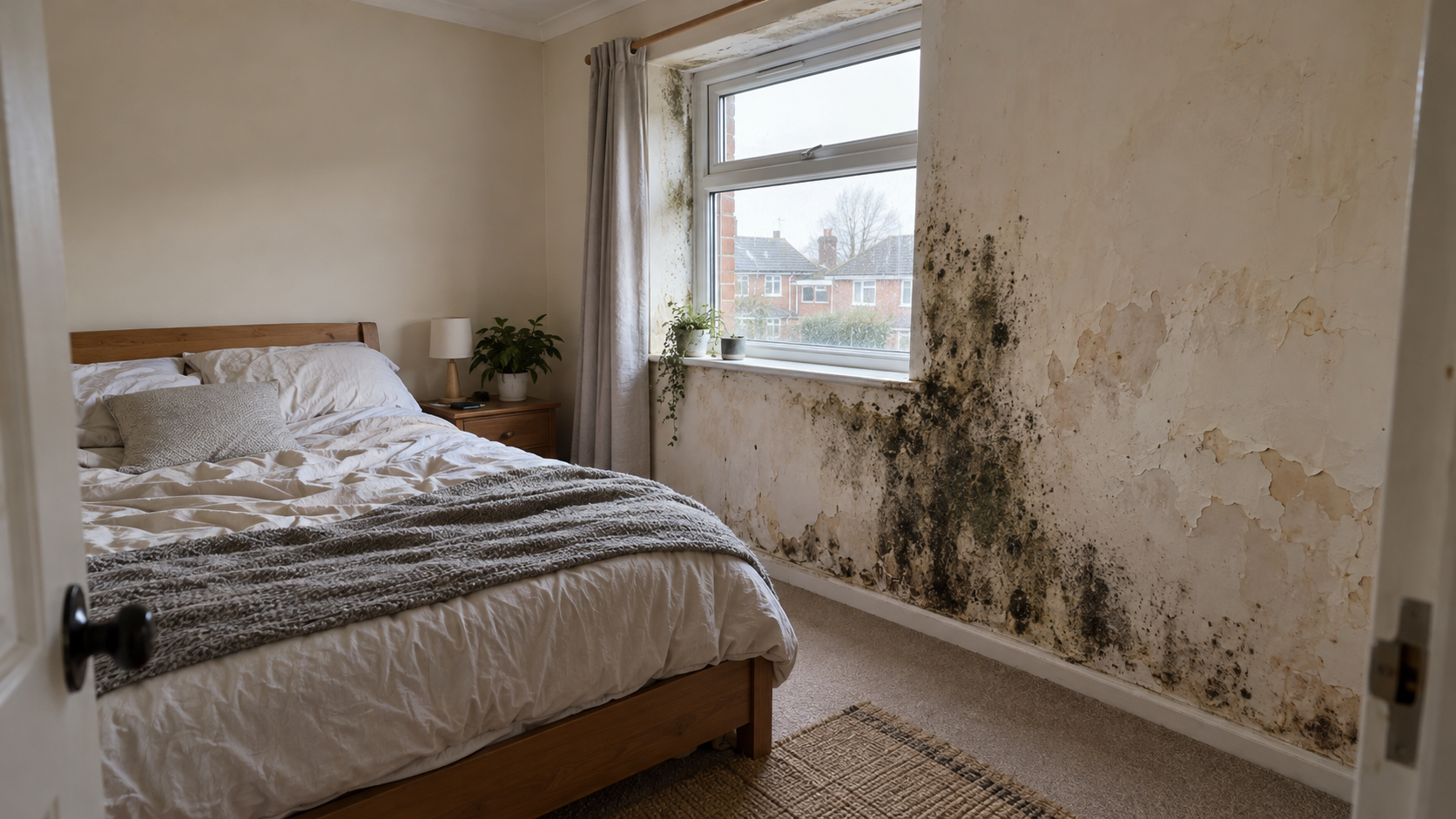
Your home should be safe to live in.
Tell us what’s wrong and our team will review it.
Explore my optionsNo account needed. At least one photo required.